Explore the 2027 Home Health Final Rule in Detail
Choose by December 16, 2026, or you are assigned to post payment review. CMS announced on November 2 that the Review Choice Demonstration (RCD) is coming to California home health agencies that bill MAC Jurisdiction 6 (Wellpoint Federal), and the path you pick will shape your cash flow, staffing, and compliance workload well into 2027.
The Key Dates
The selection period runs from November 16 to December 16, 2026, and the demonstration begins with billing periods starting on or after January 18, 2027. CMS notes that implementation depends on approval of revisions to its Paperwork Reduction Act package, so check the CMS RCD page for updates.
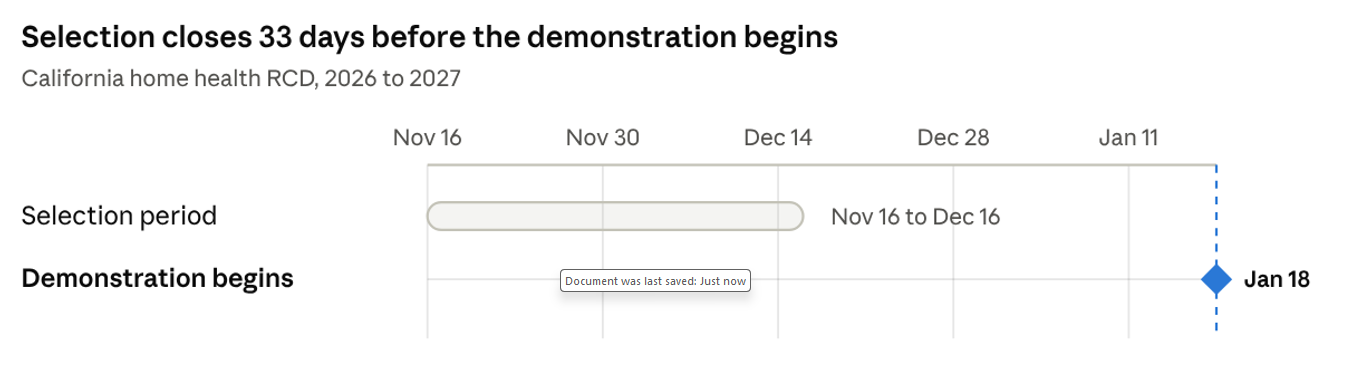
Agencies have 30 days to choose, then about a month before the first affected billing period begins.
Your Two Initial Choices
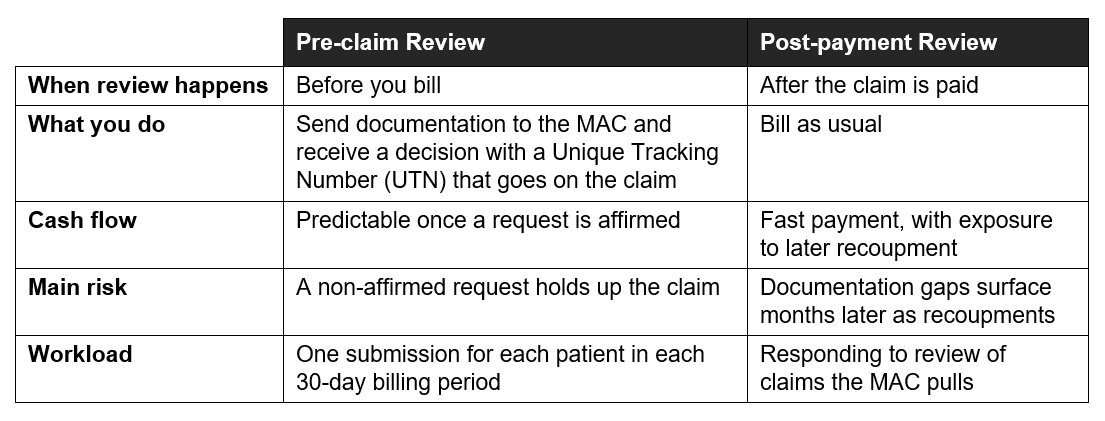
Each agency selects one starting path. If you make no selection, you are assigned to post-payment review, which can be a costly default for an agency that has not weighed the options.
Which Path Fits Your Agency
Many agencies start with pre-claim review because it gives certainty. Documentation gaps are fixed before a claim exists, rather than surfacing months later as recoupments. CMS statistics for fiscal year 2024 show that most demonstration providers chose pre-claim review and most of those requests were affirmed. Those figures are aggregated across the existing demonstration states, not California, but they suggest the process is manageable when documentation is strong.
Pre-claim review also matters for what comes after. Agencies that hold a 90% full affirmation rate across at least 10 requests in a six-month cycle become eligible for lighter review options, including relief from most reviews. Only fully affirmed decisions count toward that rate.
Post-payment review can still be the right call. It tends to suit an agency with very strong documentation, a volume of 30-day periods that would strain staff to submit one by one, or the cash reserves to absorb recoupment risk. The right choice depends on your documentation quality, volume, and staffing, which is the question we help agencies answer.
The Hidden Cost is Volume
In California, each pre-claim request covers a single 30-day billing period, so every period needs its own submission and its own UTN. An agency with an average daily census (ADC) of 300, for example, submits roughly 450 to 600 requests every 30 days before those claims can bill. Even a modest review time per patient adds up quickly.
Selections are made at the PTAN level, so an agency with several PTANs or branches makes each choice separately and multiplies the work. That is why the operational side of pre-claim review deserves as much attention as the choice itself.
Three pitfalls to plan around
-
Billing without a decision on file. The claim stops for prepayment review and, if payable, takes a payment reduction that cannot be appealed.
-
Submitting an incomplete packet. It becomes a non-affirmed decision, which counts against your affirmation rate.
-
Billing a non-affirmed request. The claim will deny.
Strong packets start with the basics: a valid plan of care and physician orders, a face-to-face encounter within the required window, and clear documentation of homebound status, skilled need, and physician care.
How Maxwell TEC Helps California Agencies
We also bring experience from every other RCD demonstration state. We have gathered lessons learned and best practices along the way, and we share them with our customers, so California agencies do not have to learn them the hard way.
Decide
- A clear recommendation, backed by your data. We review your agency structure, patient volume, and documentation history, then model the staffing and cost impact of each path. You get a reasoned recommendation before the December 16 deadline instead of a default.
- A readiness plan with dates attached. It covers confirming each PTAN, submitting your selection and keeping proof, training intake, clinical, and billing staff, and tracking your affirmation rate weekly from go-live.
Execute
- Workflows built for first-time affirmation. Through our optimization services, we help configure EMR workflows, so the right documentation is captured, reviewed clinically, and packaged correctly. Clinical review stays separate from submission and tracking, so clinicians focus on documentation quality.
- Automation to reduce manual work. Submitting requests, capturing tracking numbers, and checking status can eat staff hours. We help you evaluate automation options, so staff handle only exceptions.
Sustain
- Analytics that keep you on the path to 90%. Our business analytics track affirmation rates, non-affirmation reasons, and resubmission trends, so you catch problems before they threaten your eligibility for lighter review.
- Revenue cycle alignment. Our revenue cycle team helps make sure every claim carries the right tracking number, held claims are visible to billers, and cash flow stays predictable.
Start Before November 16
The selection period is only 30 days, and the preparation work does not end when you choose. Agencies that model their options and build their workflow now will enter 2027 ready. Book a readiness review with Maxwell TEC before November 16 by emailing sales@maxwelltec.com.
Sources: CMS, “Review Choice Demonstration for Home Health Services (RCD),” updated November 2026; CMS HH RCD Operational Guide. Confirm current requirements with CMS and Wellpoint Federal.


CMS Enrollment Freeze Signals a New Era of Scrutiny for Care at Home

Best Practices in Revenue Cycle Management